Shao Annan
3D printing resin, acrylic, stone-texture paint, model paint, alloy, clay
28.5×40×5cm
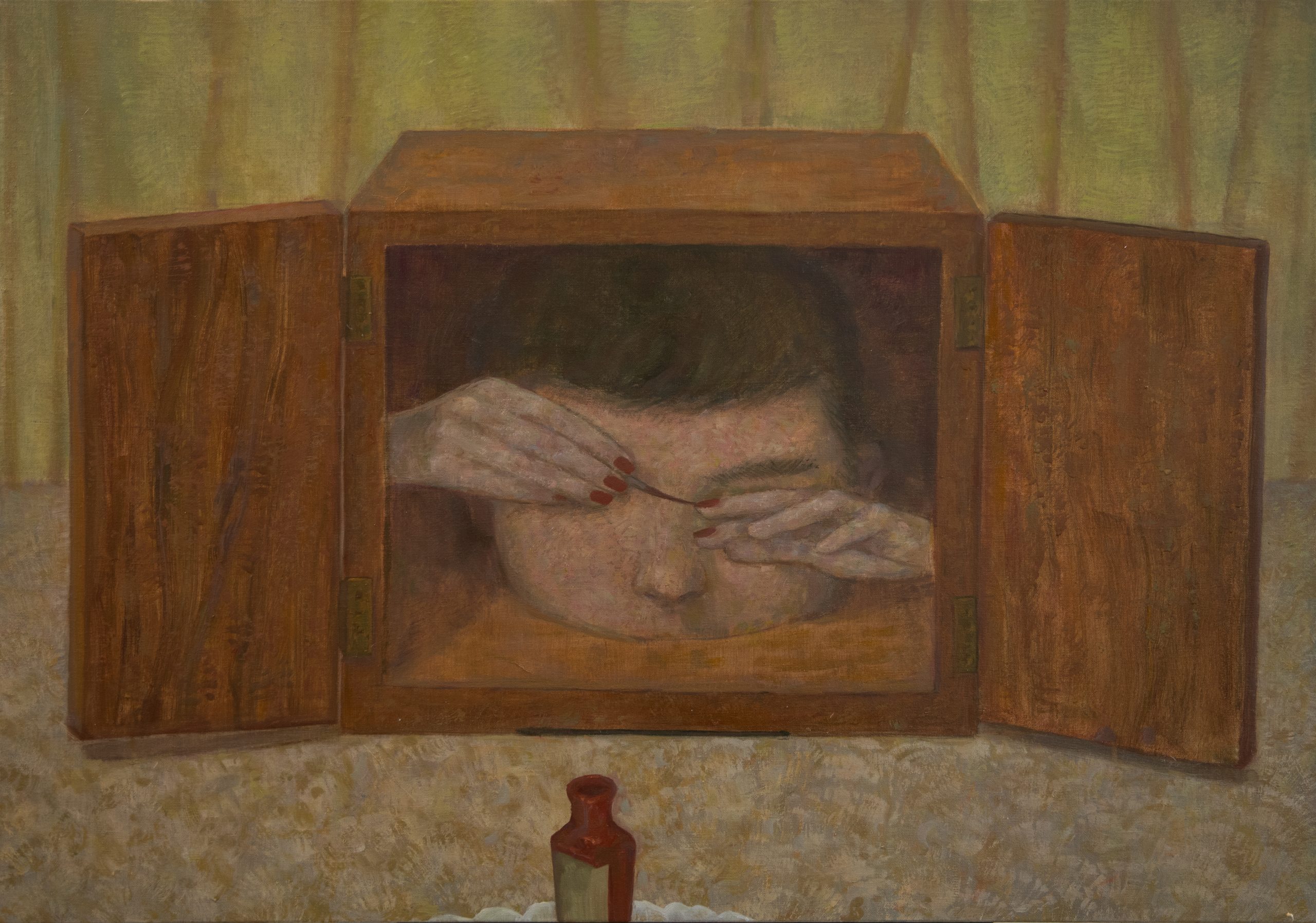
Yuan Haiyu
Oil tempera on canvas
70×100cm
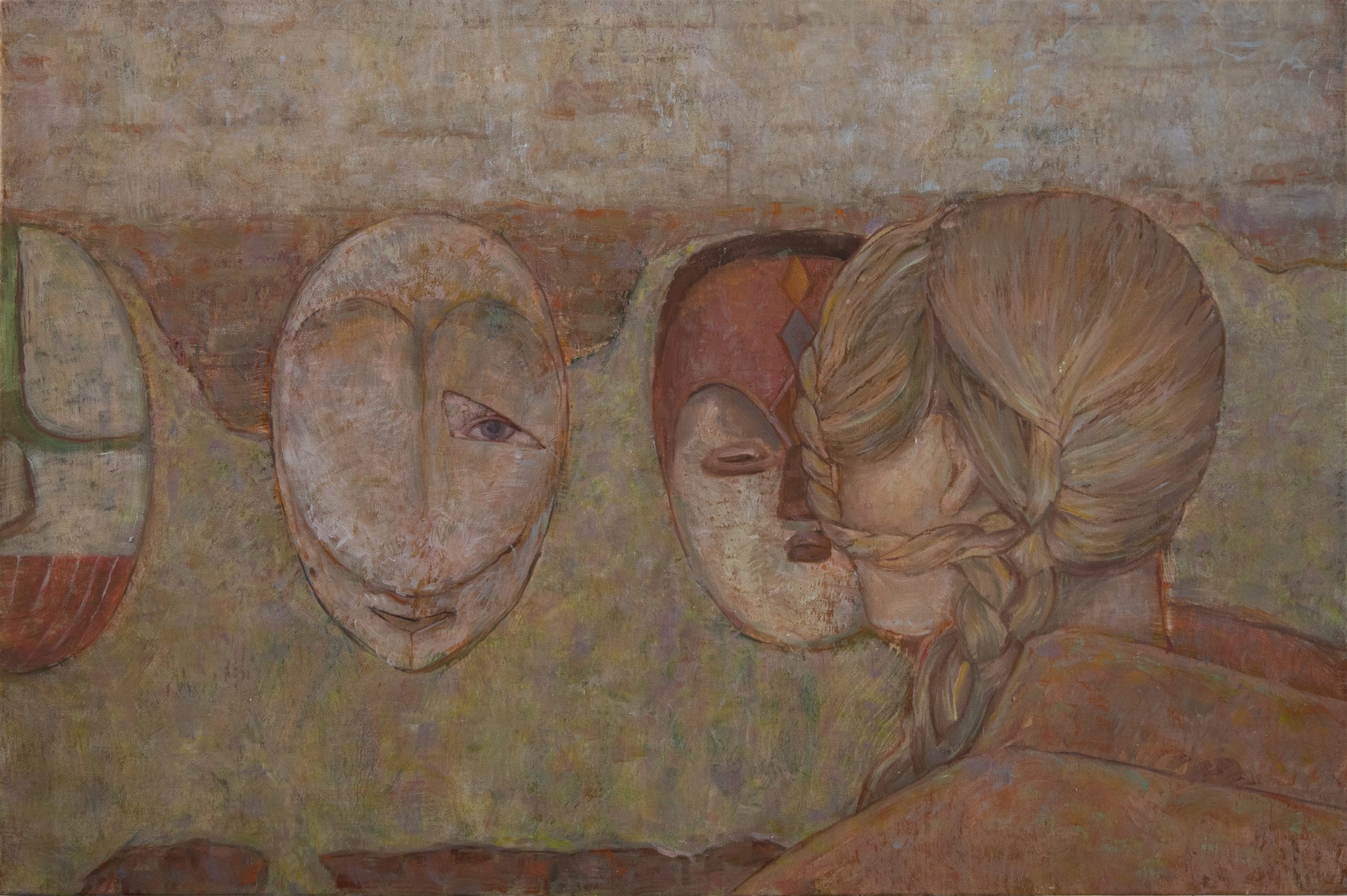
Yuan Haiyu
Oil tempera on canvas
60×90cm

Zhang Jialei
Acrylic on canvas
180×140cm

张嘉蕾
Acrylic on canvas
180×100cm
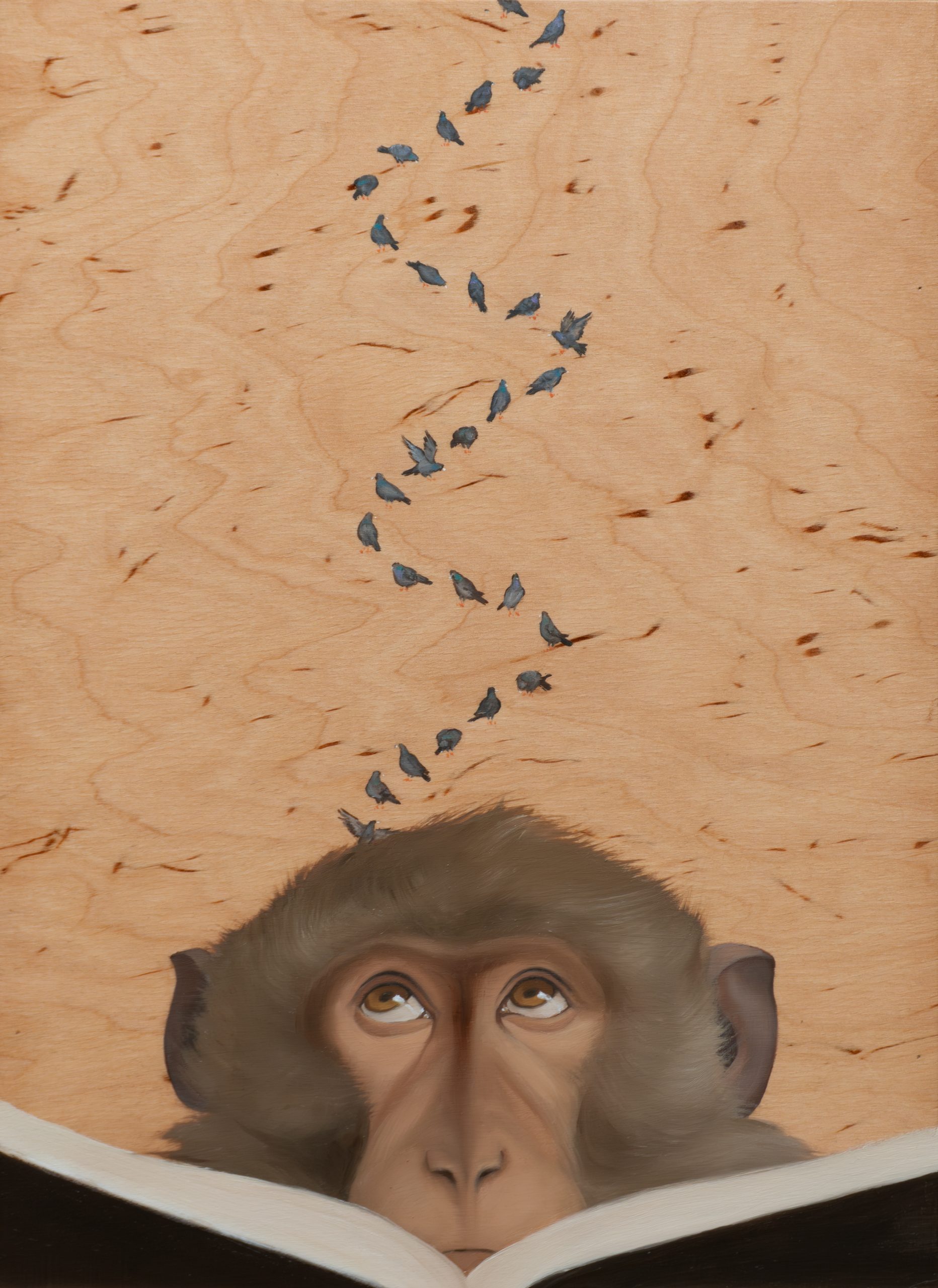
Qin Ni
Oil on board
33×24cm
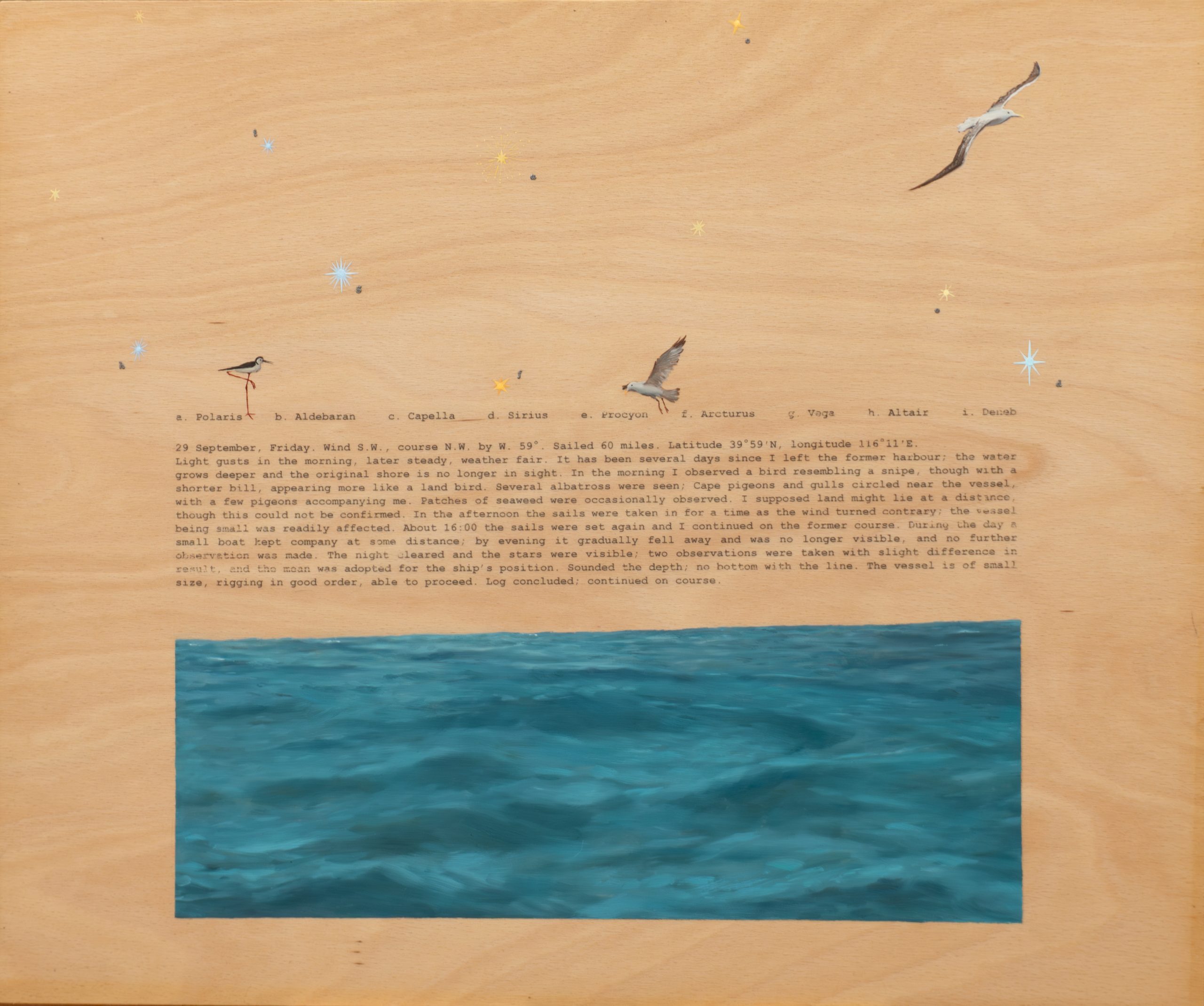
Qin Ni
Oil on board
55×46cm
Qin Ni
Oil on board
81×111cm

Shao Annan
3d print resin, acylic, stone paint
53×25.1×4.86cm

Wang Xinyan
Oil on canvas
150×150cm

Wang Xinyan
Oil on canvas
150×200cm
Yuan Haiyu
Oil tempera on canvas
90×120cm

Qi Baiting
Wood, Plastic, Glass, Crystal, Sand, Found Objects
110×35×20cm
Qi Baiting
Wood, Ball, Motor, Light, Sand, Paper, Found Objects
2×2m
哎呀!哎呀!我要迟到了!
Oh Dear! Oh Dear! I Shall be Too Late!
策展人 | Curator: 陈宇滢 | Chan Yu Ying
艺术家 | Artist:
孟庆隽、亓百婷、秦妮、邵安南、王鑫焱、袁海宇、张嘉蕾
Meng Qingjun, Qi Baiting, Qin Ni, Shao Annan, Wang Xinyan, Yuan Haiyu, Zhang Jialei
蜂巢|艺术研究项目 No. 4 | Hive Art Research Program No. 4
展览时间 | Exhibition Dates: 2026.3.21 – 2026.5.5
地点|Venue:
蜂巢|北京 总部 DE厅 Hive | Beijing
地址|Address:
北京市酒仙桥路4号798艺术区E06 | E06, 798 Art District, Chaoyang District, Beijing, China
Hive Center for Contemporary Art is pleased to announce that, on March 21, 2026, it will present Hive Center for Contemporary Art’s Research Project No. 4, Oh Dear! Oh Dear! I Shall be Too Late!, in Gallery DE at Hive Beijing. Curated by Chan Yu Ying and featuring works by Meng Qingjun, Qi Baiting, Qin Ni, Shao Annan, Wang Xinyan, Yuan Haiyu, and Zhang Jialei, the exhibition takes the “late rabbit” as its point of departure to explore contemporary regimes of time and the ways individuals keep running within an ever-accelerating world while continually renegotiating their own positions within it. The exhibition will remain on view through May 5, 2026.
The theme of the exhibition is inspired by the White Rabbit from Alice’s Adventures in Wonderland by Lewis Carroll, who leads Alice into the rabbit hole. In the narrative, the rabbit anxiously repeats that he is about to be late. He is often understood as a “messenger of time”: not time itself, but a subject driven by it—perpetually late, perpetually anxious, and constantly pursued by schedules. With the establishment of modern temporal regimes, time gradually shifted from the rhythms of nature to a system organized by clocks and order, and the White Rabbit has come to symbolize this very logic of time.
In a certain sense, the order shaped by such temporal regimes carries a measure of absurdity. While it appears to emphasize rules and efficiency, it continually produces new forms of anxiety and repetition. People are driven by schedules and measurements, maintaining their motion within an increasingly rapid tempo, yet rarely arriving at any definitive destination. Placed within the context of contemporary culture, this condition resembles an ongoing mode of existence: one is perpetually “running out of time,” often without even knowing what one is late for. Lateness itself becomes a way of being. In this exhibition, this state of being driven by time is translated through the practices of different artists into their respective visual narratives.
The exhibition opens with Shao Annan’s video work Hamster Run. The piece unfolds from a first-person perspective: one morning, the protagonist checks on the hamster she keeps at home, as the hamster breaks free, she suddenly falls into a dark passage, plunging into a dungeon-like labyrinth. In the course of chasing the hamster while evading unknown threats, she repeatedly stumbles into mechanical devices seemingly designed for the animal, compelled to accept the challenges posed by the maze. Through cycles of failure and repetition, she eventually realizes that the obstacles within the labyrinth are not designed solely for the hamster—they are also part of a mental structure she herself has constructed, shaped by memory and desire.
On the other side of the space, Zhang Jialei’s TOo is presented in the same line of sight as Wang Xinyan’s Spores of the Ninth Moon, where two distinctly different imaginaries of life unfold in dialogue. The former is light and intricate, with images that continuously split and grow across the canvas.; the latter, by contrast, builds a landscape of expanding organic life through dense yet fluid layers of color.“TOo” functions both as a homophone for “rabbit” in Chinese and as a reference to excess—an ever-accelerating rhythm that continuously spills beyond its limits. In contrast, Wang Xinyan’s work unfolds from the reproductive logic of fungi: spores drift through the air, initiating new cycles of growth. When dense clusters of spores hover in the atmosphere, light refracts through them, forming flowing bands reminiscent of the aurora. The “Ninth Moon” alludes both to the full moon of the fifteenth day of the eighth lunar month and to the nine-month cycle of gestation. The spread of fungi, the circulation of lunar phases, and the formation of the body intertwine here, composing a vision of life that oscillates between natural ecology and cosmic imagination.
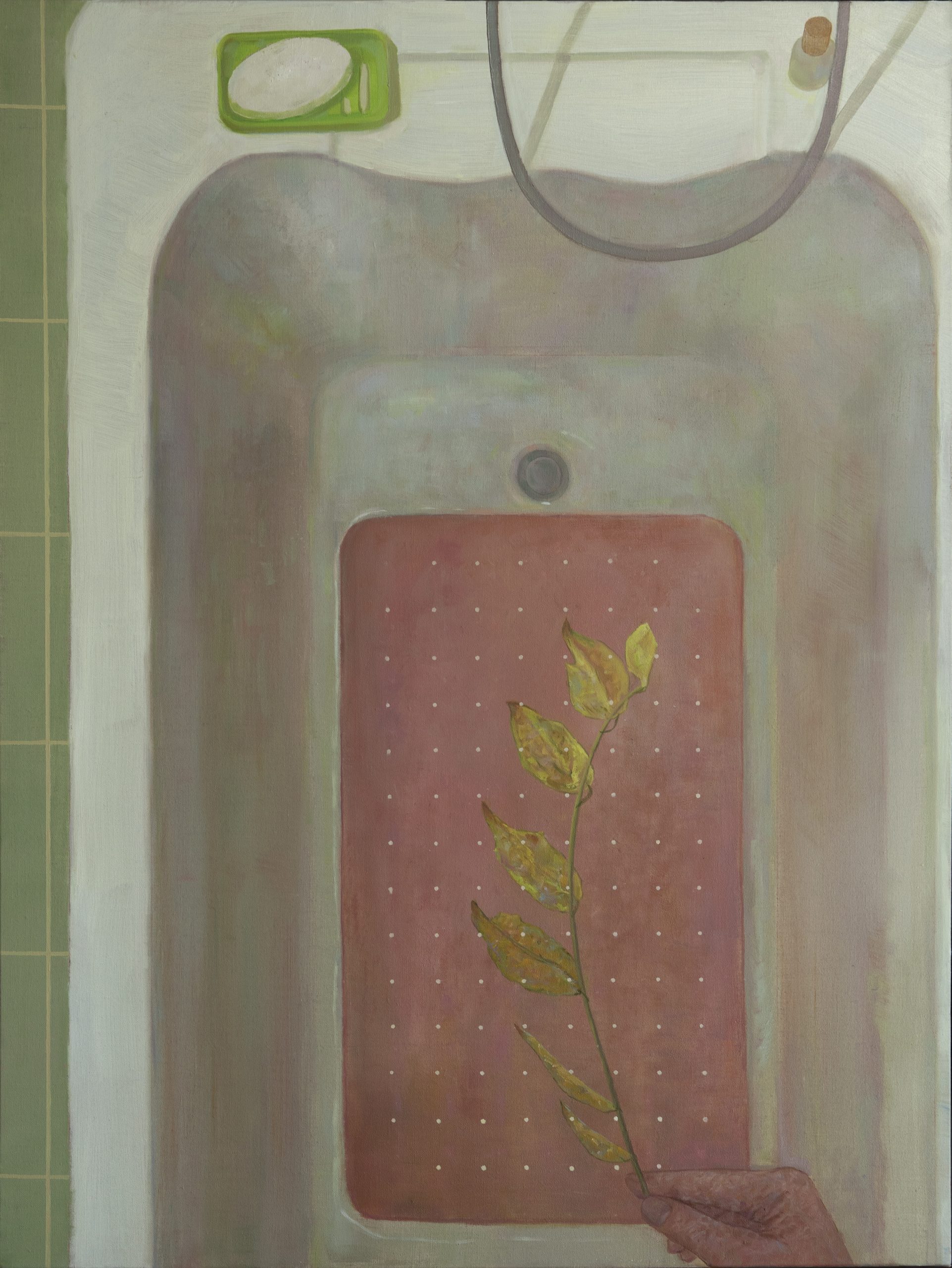
Following a trail of animal footprints extending along the wall, visitors enter the second-floor space, where Meng Qingjun’s Stare and Yuan Haiyu’s Insight form an implicit exchange of gazes. Both works feature similar square structures and eye-like focal points, as if they were looking at each other across the space. Standing between them, viewers may sense a subtle tension, as though time were briefly suspended—accompanied by the faint unease of being watched by an unknown gaze. Beside Stare, Meng Qingjun’s Squint continues the artist’s signature “face-script”, faces in a calligraphy-like, mimetic form: as the act of staring grows tired, the gaze seems to narrow and soften, suggesting a brief moment of rest. Yuan Haiyu’s works Hinge and Face and Mask further shift this dynamic of looking toward the instability of self-recognition. If a face only truly exists in the moment it meets another’s gaze, the individual is continually reconstructing their own image between being seen by others and looking at themselves.
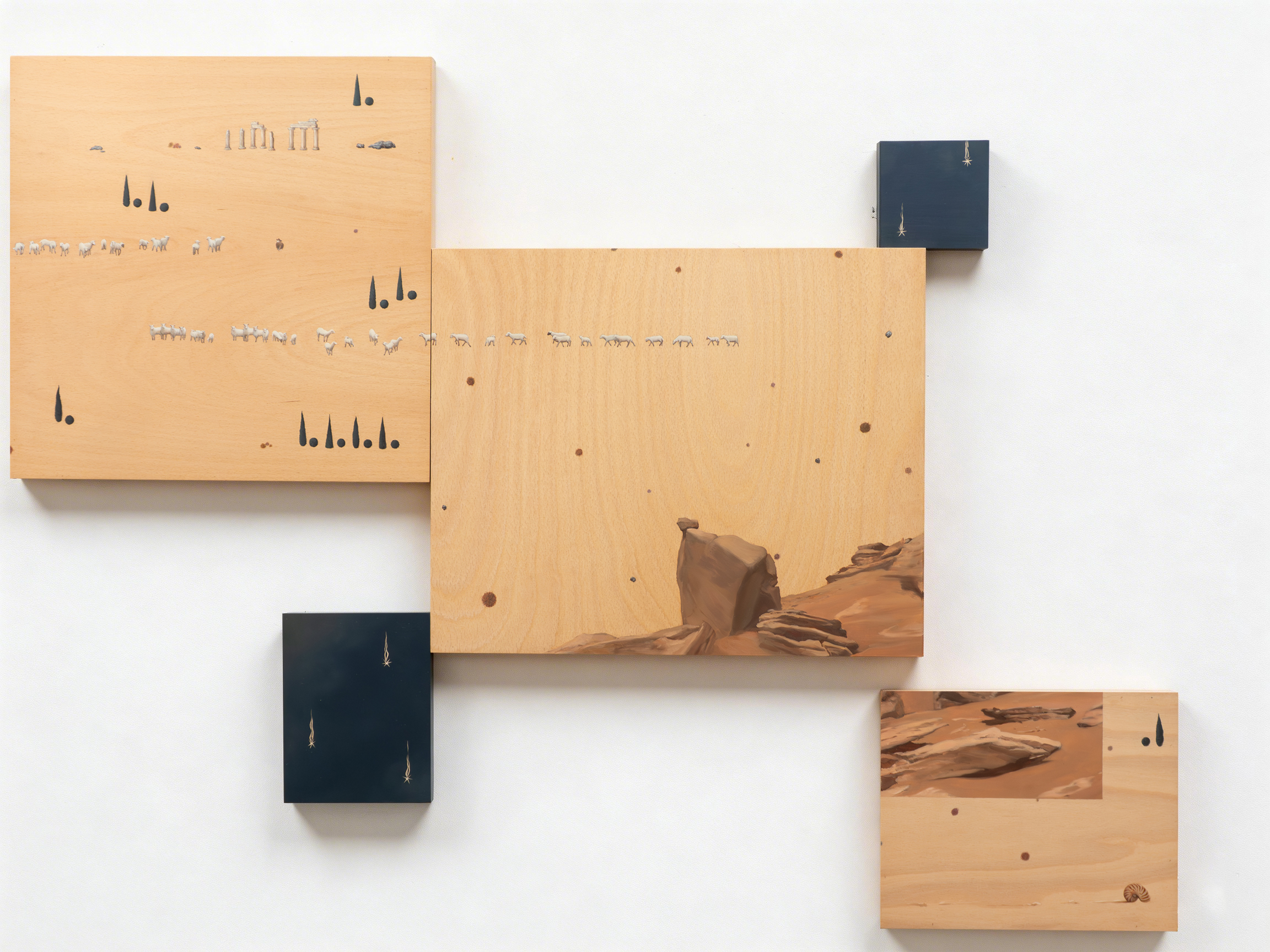
Ahead are three works by Qin Ni. She organizes images into a structure resembling a knowledge system, using the Dewey Decimal Classification as the basis for her titles, so that each piece appears like an archived entry within a catalog. In 521.11 Polarization Notes—The Third Movement of the Flock, a collage-like composition unfolds as a series of rearranged visual fragments: drifting tumbleweeds, herded sheep, and geometric artificial landscapes form a rhythm-like order across the image. 910.41 Voyage Log I borrows the writing format of the voyage logs of James Cook, yet records a journey that does not exist on any map. Stars are marked, positions corrected, and routes calculated, as personal experience is translated into a private star chart. Through these slow acts of observation and recording, humans quietly learn the temporal rhythms of the natural world, while searching within them for their own direction.
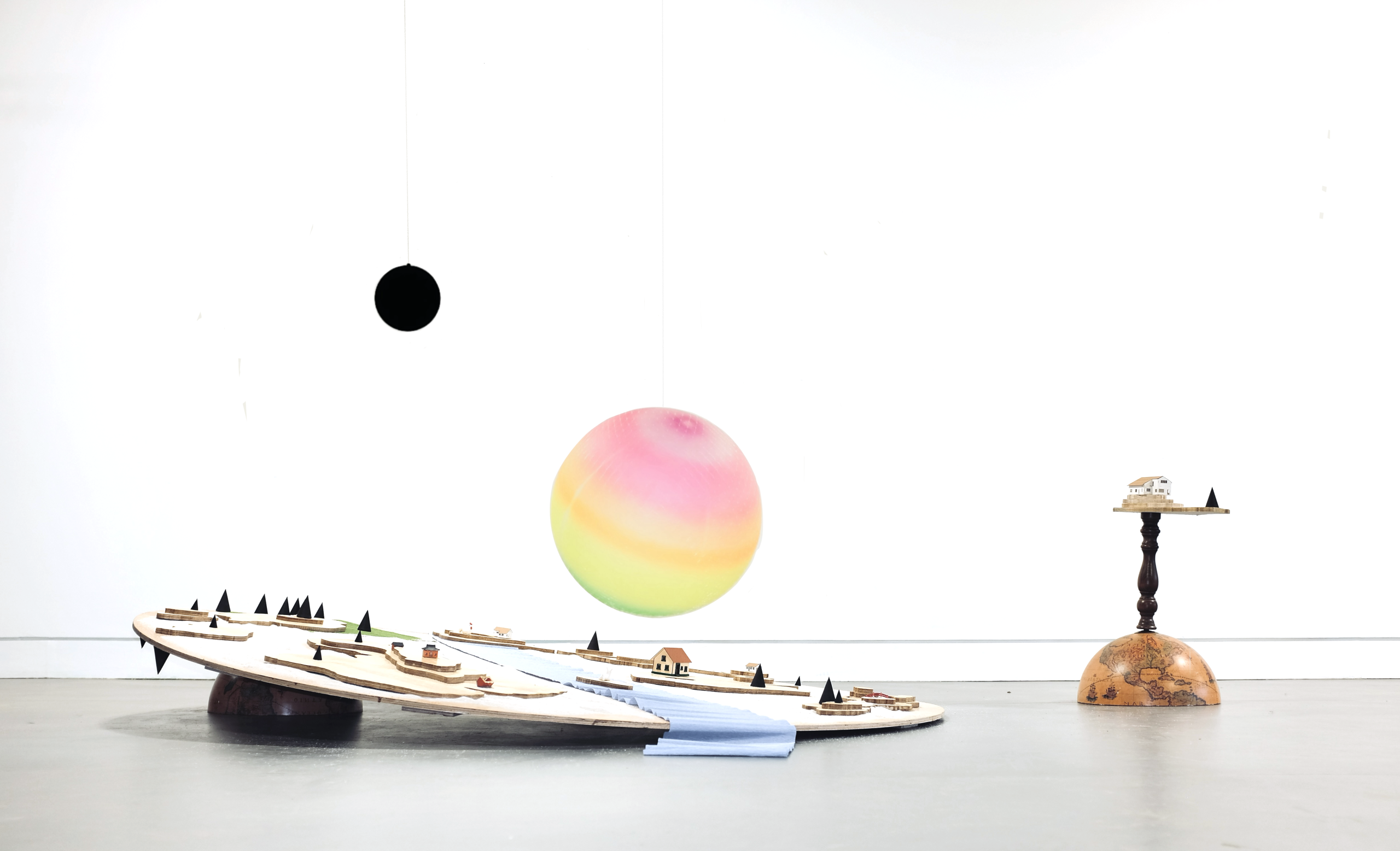
The final section of the exhibition unfolds with Qi Baiting’s Tradewind. The small boat seems to set sail from the imagined route recorded in Qin Ni’s Logbook, following unseen currents toward the depths of the gallery. At the far end of the space, the installation Timefinder opens into a rearranged miniature landscape: wooden terrains, rivers, and scattered small buildings—constructed with reference to the artist’s hometown—move slowly in motion. Within this scaled-down world, time no longer advances according to a single standardized measure, but is instead re-perceived and reoriented through local experience and natural rhythms.
As visitors retrace their steps to leave the exhibition, they encounter another work by Meng Qingjun, Wait, and Wait Some More, quietly hanging on the opposite side of the wall near the staircase—the other side of the animal footprints that had earlier guided them into the space. It appears almost like a slowed-down reply. In a time when information and images continue to accelerate, the practices of young artists often unfold between the impulse to express and a lingering hesitation.
As visitors look back at the footprints leading toward the depths of the gallery, this quiet “wait, and wait some more” seems to become the exhibition’s final gesture—a brief pause within the ongoing rush of time.